
After Testing 10 Shop Management Platforms, Here’s What Actually Works for Large Stone Operations
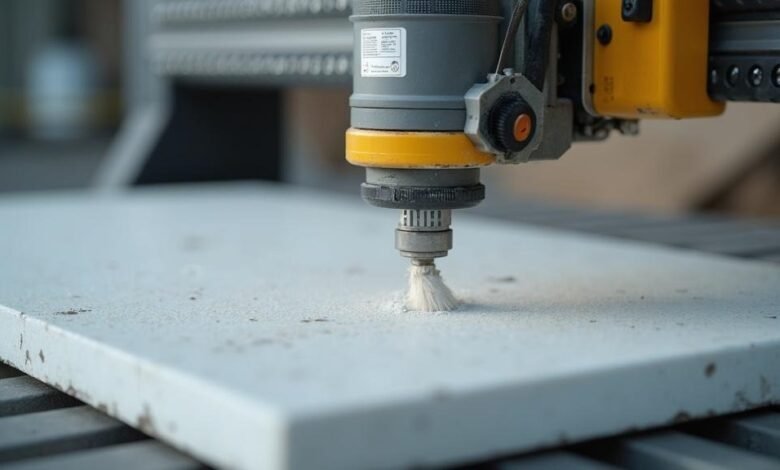
The past two years have reshuffled things noticeably. AI-driven nesting and cloud quoting have moved from novelty to expectation, and shops running 20-plus jobs a week are asking harder questions about where their slab waste actually goes. I spent time inside ten platforms, talked to fabricators running everything from garage-size shops to multi-location operations, and kept notes on what held up under real volume.
A fair warning before the list: pricing tiers shift, and some vendors quote custom contracts for larger shops. Treat any figure here as a starting point, not a final number.
The 10 Best Software Options for Large Stone Shops
1. SlabWise
This one earned the top spot because it solves three problems at once instead of handing you three separate subscriptions. The AI nesting engine handles vein-aware placement, edge rotation, and book-matching across multiple jobs batched onto a single slab, which is where most shops silently bleed margin. Beyond yield, it processes DXF files as a middleware layer, catching sink cutout mismatches and geometry errors before anything reaches the CNC. The quote side pulls measurements directly from those DXFs, presents a tiered Good/Better/Best pricing structure to the customer, and collects e-signature plus payment through Stripe inside the same flow. It is purpose-built for US stone fabricators. The $1-for-seven-days trial removes almost every excuse not to test it, and the Pro tier at roughly $299 per month covers unlimited active jobs.
See also: Health Logs Overview Covering Chloroandsleep and Monitoring Records
2. Moraware CounterGo
The incumbent everyone knows. CounterGo sits around $100 per user per month and handles drawing and quoting reasonably well for shops that need a straightforward estimating tool. The install base is over 2,600 users, which tells you something about reliability over time.
3. Moraware Systemize
Same family, different job. Systemize layers scheduling and job tracking on top. Pricing runs $200 to $400 per month depending on which modules you add, with a $50-per-user charge after the fifth seat. Shops often run CounterGo and Systemize together, so budget accordingly.
4. ActionFlow
Moraware‘s workflow and automation layer. Large shops use it to push jobs through defined stages without relying on someone remembering to send an email. Reduces dropped handoffs between templating, production, and install crews.
5. FabSuite
An integrated platform that ties together stock management, production scheduling, and job-status tracking under one roof. It is not the most visually modern tool, but fabricators who have run it for years tend to stay. The job tracking depth is its main selling point for high-volume operations.
6. SigmaNEST
Built specifically for CNC nesting and material yield optimization. It is not a quoting or job management tool, but if yield is where you are losing money, SigmaNEST’s nesting algorithms are serious. Works across material types beyond stone.
7. EasySTONE / EasyStoneShop
A CAD/CAM and shop management combination. Entry pricing is around $150 per month. It appeals to shops that want drawing and production in one environment without buying a full enterprise suite.
8. SlabWare (not SlabWise)
A fabricator software and distribution platform. The name causes confusion. Worth clarifying with vendors what version or module set your shop actually needs, because the scope varies.
9. QuickBooks (with stone-specific add-ons)
Plenty of mid-size shops still run their financials here and bolt on a templating or quoting tool separately. It is not a fabrication system. But if your accounting is already in QuickBooks and you are not ready to rebuild everything, pairing it with a focused quoting tool can hold you over.
10. Spreadsheets and Whiteboards
Listed honestly because half the shops I talked to still use them for at least one part of the process. They cost nothing and break everything above a certain job volume. The shops most interested in switching to real software were the ones that had finally maxed out what a shared Google Sheet could do.
What Separates the Top Picks
The clearest split is between tools built around stone’s specific workflow (nesting, DXF, slab inventory, tiered quoting) and general shop or accounting platforms adapted to fit. Neither category is useless. The question is where your shop’s actual bottleneck sits right now.
Common Questions
Does SlabWise’s AI nesting actually handle book-matching, or is that a marketing claim?
Book-matching support is documented in SlabWise’s publicly listed feature set, and the nesting engine is described as vein-aware. That means it accounts for slab orientation when placing multiple jobs. Whether it matches your specific workflow depends on how your shop files DXFs, so the $1 trial is worth running against a real job before committing.
Can a large shop run Moraware CounterGo and Systemize together without ActionFlow?
Yes. CounterGo and Systemize are sold and used independently. ActionFlow adds automation on top, mainly for shops that want jobs to move through defined stages without manual nudging. If your team is small enough that handoffs happen face-to-face, ActionFlow may not add enough to justify the extra cost right away.
Is SigmaNEST a practical standalone purchase for a stone shop, or does it need to integrate with a job management platform?
SigmaNEST is a nesting and yield tool, not a job management system. Shops typically run it alongside a quoting or scheduling platform. If yield loss is your primary problem and you already have job tracking covered elsewhere, it makes sense as a standalone investment. It is not a replacement for CounterGo or FabSuite.
SlabWare and SlabWise have nearly identical names. What is the practical difference for a shop evaluating both?
SlabWise is a fabrication management platform built around quoting, DXF processing, and nesting for US stone shops. SlabWare is a separate product focused on fabricator software and distribution. The overlap is only in the name. When requesting demos, confirm in writing which product you are evaluating, because the feature sets serve different parts of the operation.
At what job volume does FabSuite’s depth actually start paying off compared to a lighter tool like CounterGo?
FabSuite’s stock management and production scheduling layers add the most value when a shop is tracking slab inventory across multiple jobs simultaneously and needs job-status visibility at a glance. Shops running fewer than 10 active jobs at a time often find CounterGo sufficient. Above that threshold, the tracking depth FabSuite offers tends to justify the added complexity.
Sources
- Moraware public pricing page (moraware.com)
- SigmaNEST product documentation (sigmanest.com)
- EasySTONE published pricing (easystone.com)
- FabSuite product overview (fabsuite.com)
- SlabWise publicly listed tier information and trial offer
